

Services
Treatment options for children, teens, and adults.
Braces
Our office is proud to offer LightForce customized braces. Conventional braces are produced with the same prescription and shape for every patient. LightForce is different: each bracket is designed and manufactured for the individual tooth, so the appliance is truly one size fits one — uniquely tailored for each tooth on each patient.
Custom LightForce appliances are available in metal or a translucent material. Colorful rubber ties or translucent ties can be used on either version. Both options are fully customized to your treatment plan rather than selected from a one-size-fits-all inventory. LightForce braces represent the latest technology in orthodontic treatment.
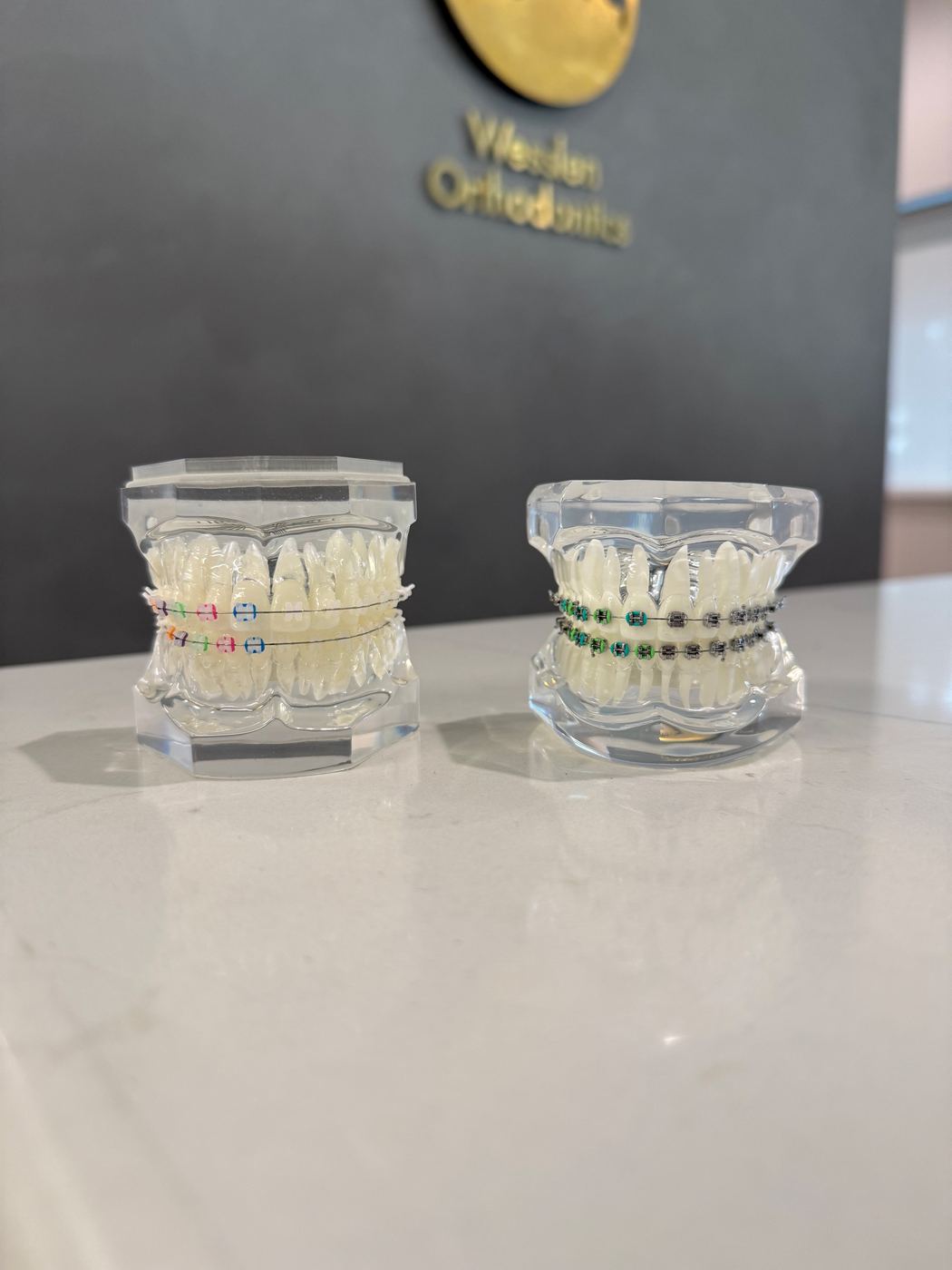
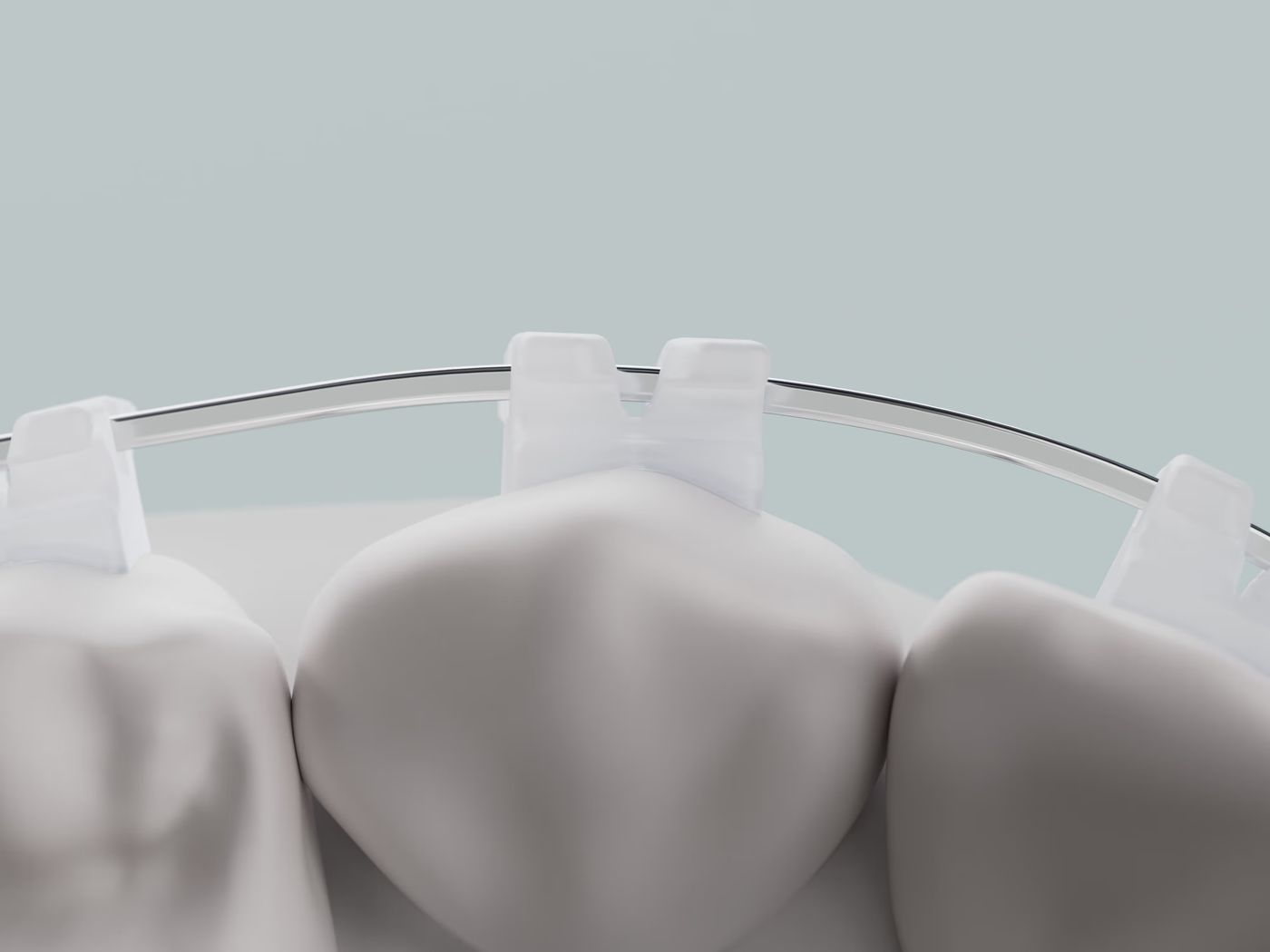
Treatment with LightForce braces is typically more efficient than traditional braces. Several unique factors contribute to increased efficiency. First, the braces are manufactured very precisely using 3D printing. The tolerances are much tighter than traditional metal injection molding techniques. This allows for near complete expression of the planned movement on teeth. Accurate manufacturing also allows the bracket shape to be a perfect match to the shape of each tooth. Secondly, because a digital mock-up is done when planning treatment, potential alignment and fit issues can be intercepted early and built into the plan instead of the traditional “see what happens” approach with one-size-fits-all treatment. Finally, placement of braces is done accurately with 3D printed templates. In many cases this can intercept potential human error in judgement at the time of placement.
Who is a candidate for LightForce braces?
Most children, teens, and adults who need comprehensive orthodontic treatment can be treated with LightForce. Each bracket is designed for the individual tooth rather than chosen from a one-size-fits-all inventory. We will confirm whether LightForce, aligners, or another approach is the better fit at your complimentary consultation.
How long does treatment with LightForce braces usually take?
Many comprehensive treatments finish in about 18–22 months. Custom LightForce appliances can shorten that in some cases, sometimes by as much as 40%, with some finishes in 8–10 months. Impacted teeth, extractions, severe crowding, and expansion tend to add time.
Aligners
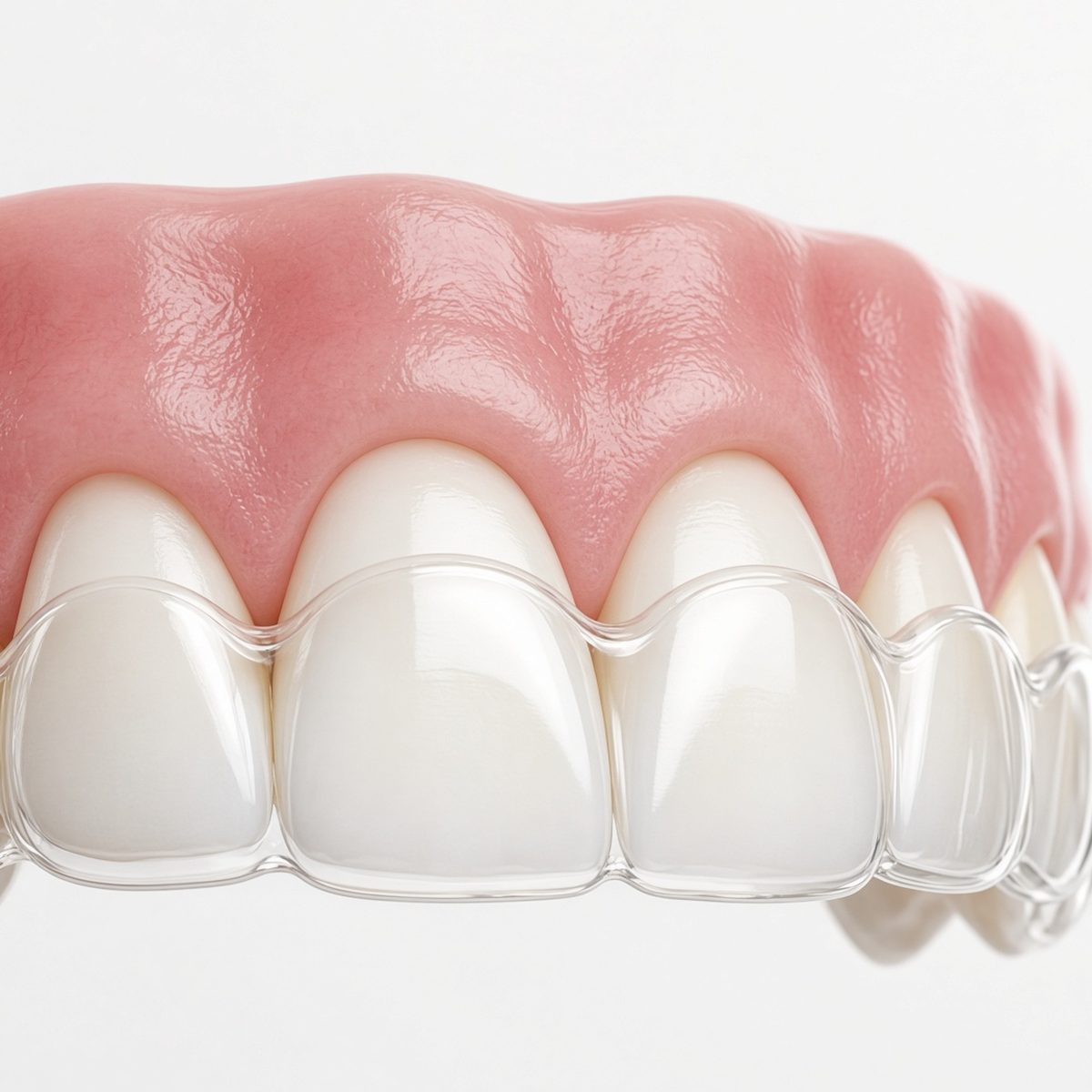
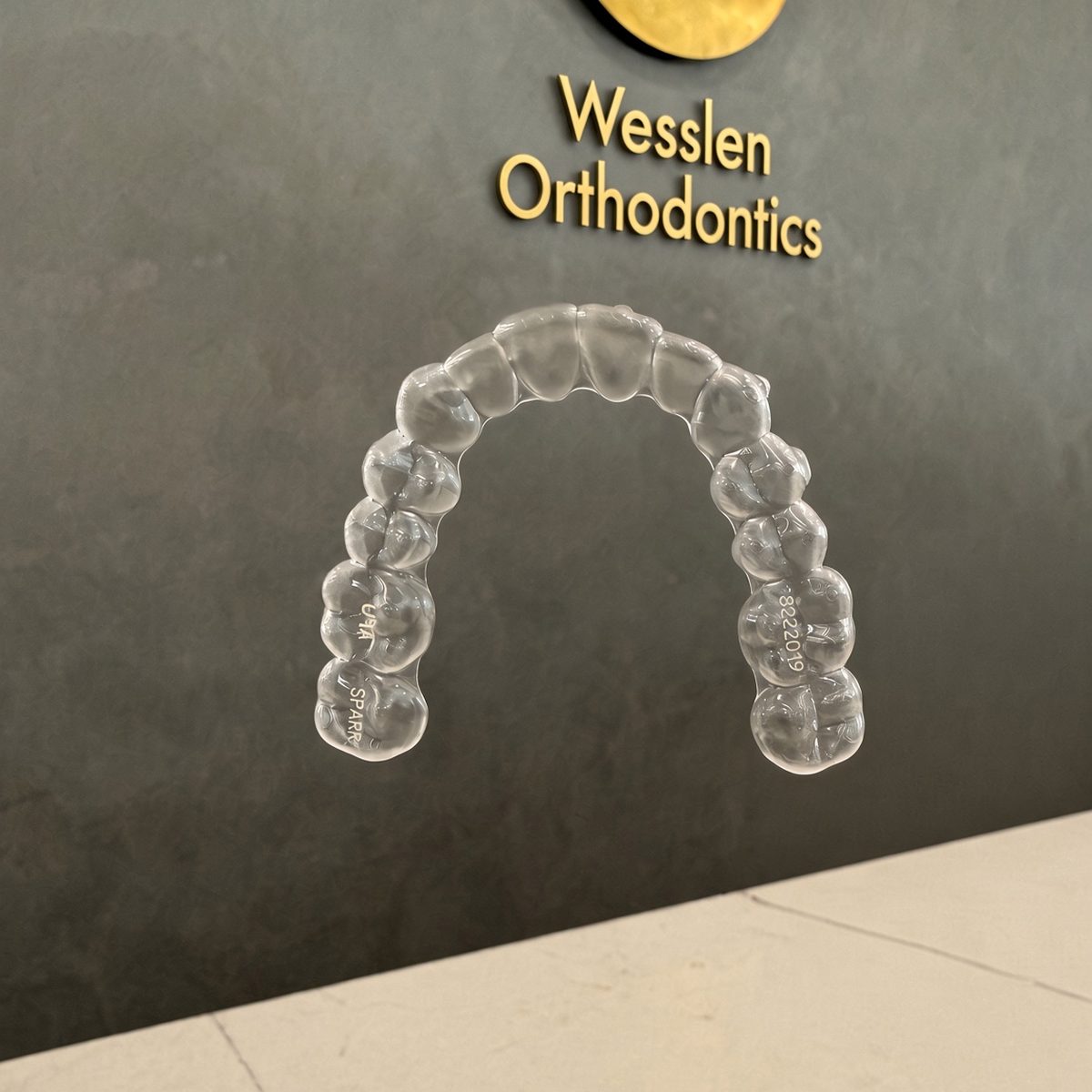
Clear aligners are a series of transparent plastic trays that gradually move the teeth. They are made to be less noticeable than braces and can be removed for eating and brushing. Each tray is worn for a set period, then exchanged for the next as the teeth shift toward the planned position.
Our office is experienced with and uses a variety of aligner brands. In some basic treatment plans we are able to manufacture our own aligners in-office.
Who is a candidate for clear aligners?
Aligners work well for many mild to moderate alignment and bite problems, especially when a patient will wear trays as directed. More complex movements may be better treated with braces. We use several aligner brands and can manufacture some simpler series in-office. Read more about DIY aligners if you are comparing at-home options.
Can I take aligners out to eat?
Yes. Trays are removed for eating and brushing, then worn the rest of the day and night so teeth keep moving toward the planned position.
Interceptive (Phase I) treatment
Early interceptive or Phase I treatment is often beneficial to address social concerns, maintain space due to early loss of or missing primary teeth, or functional problems such as crossbite, palatal expansion, and habits. In the majority of cases, a second phase of treatment is needed once the permanent dentition is complete. Some common examples of things we use in early interceptive treatment are described below.
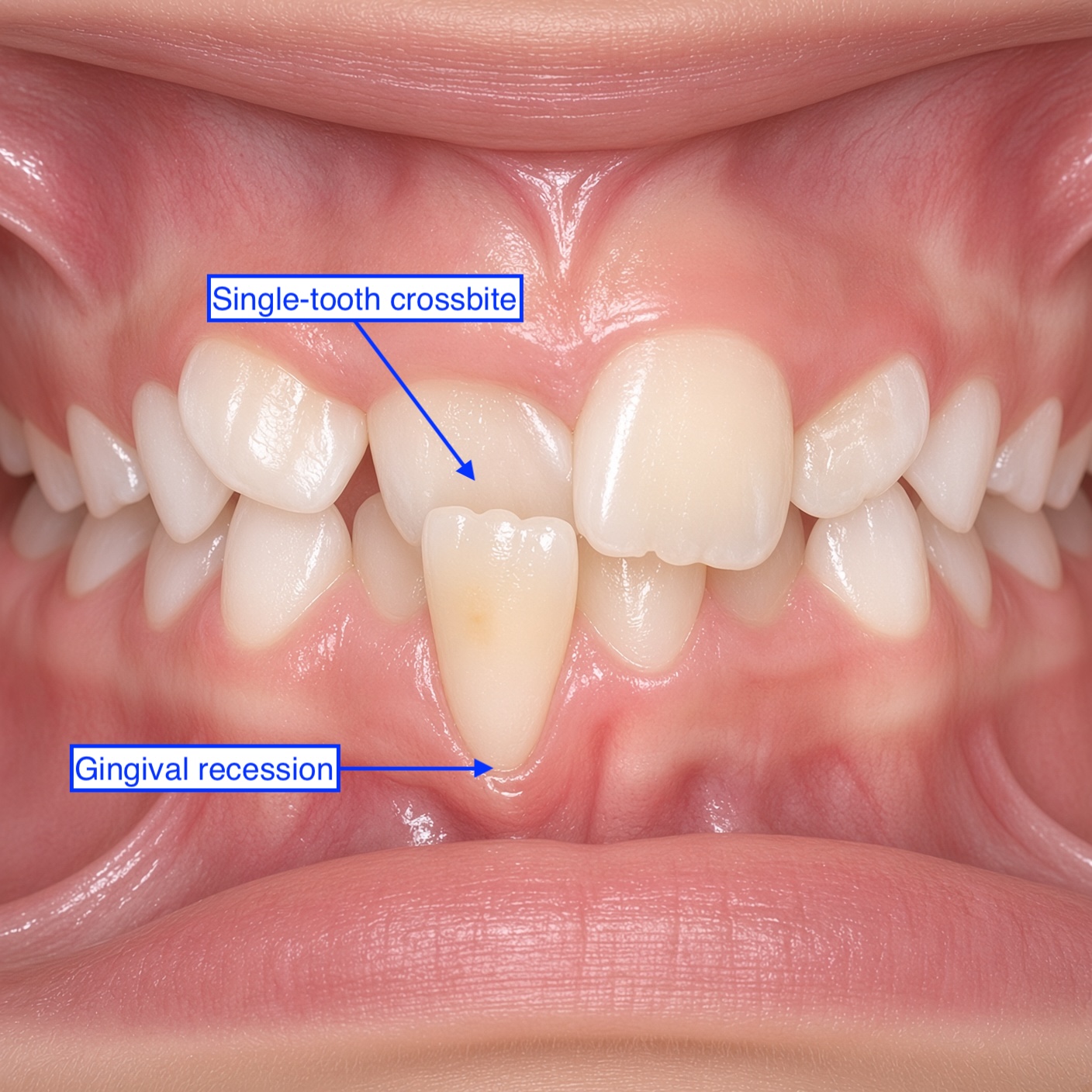
Single-tooth crossbite
A single upper tooth in crossbite sits behind the lower teeth instead of in front of them. Left untreated, that interference can contribute to wear and gingival recession at the gumline of the affected tooth. This problem can be treated a number of ways. Sometimes limited braces are used. Sometimes a retainer or aligner can be used. In some cases this can be corrected by using a redirection ramp that catches the tooth as it erupts and redirects it into the proper position.
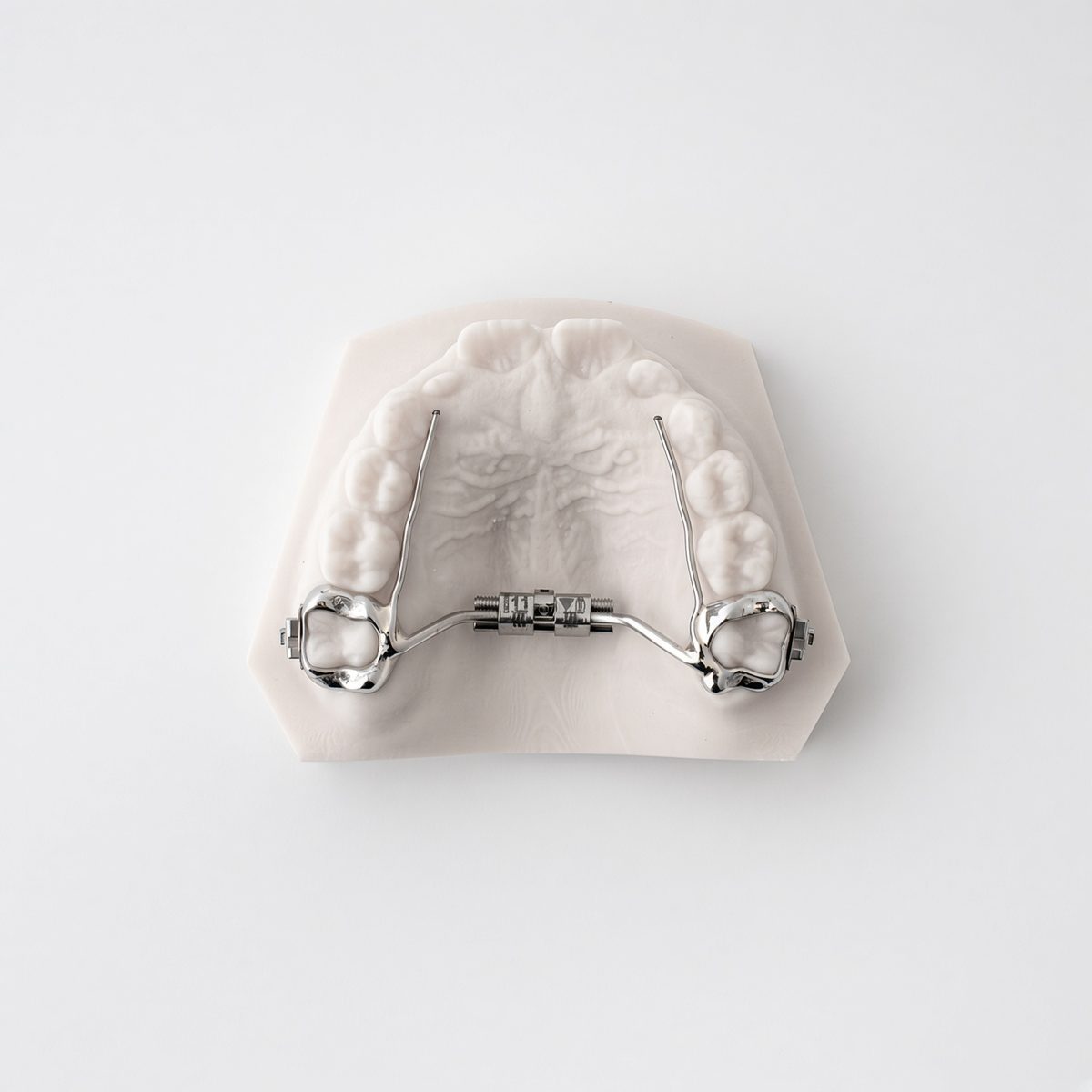
Palatal expander
A palatal expander widens a narrow upper jaw. This compact expander example is shown on a dental model, with bands on the back teeth, a midline screw, and anterior arms. Palatal expanders not only widen the teeth, but if done at the right time can widen the upper jaw bone (maxilla) as well. Widening the upper jaw can resolve crossbite on the back teeth and make room for the front teeth in cases where there is significant crowding.
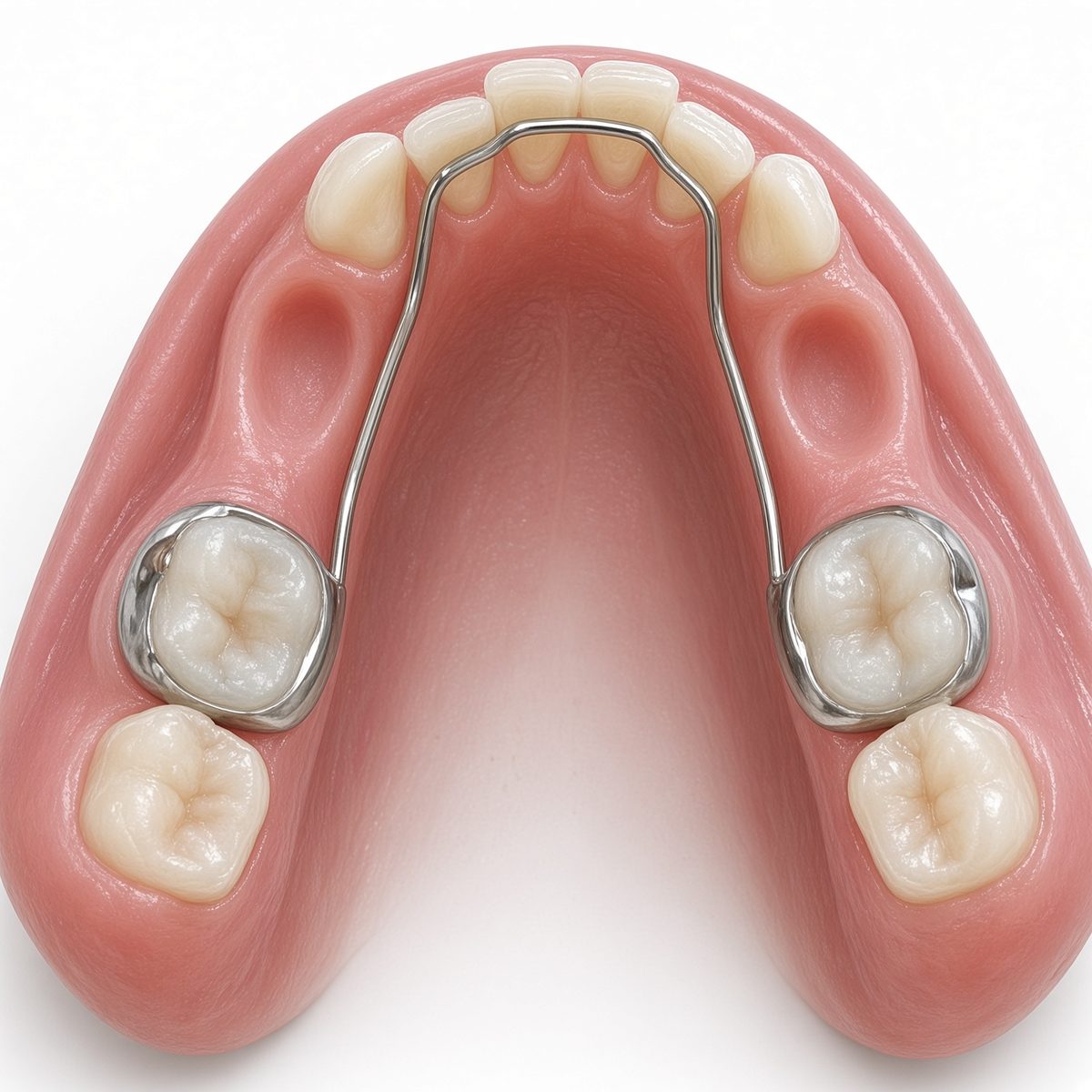
Lower lingual holding arch
A lower lingual holding arch is one of several types of a space maintainer and one we use quite frequently. When primary teeth are lost early or extracted prior to when the permanent tooth is ready to erupt, it is useful to maintain the parking place for the next tooth to fit into. Bands on the molars and bars along the inside of the arch hold room for the permanent teeth. This is typically a passive and very comfortable appliance for patients to use. It is cemented in place and dental development is monitored over time. Once teeth erupt or space maintenance is no longer needed it is removed.
Comprehensive treatment
From children to adults: crooked teeth, bite problems, impacted teeth, crowding, and functional problems. Support for restorative dentistry and combined surgical plans.
Retainers and bleaching
Retainers are included with comprehensive treatment and some early treatments. Replacement retainers and subscription products are available. Clear retainers can be used with optional take-home bleaching.
Digital records
3D intraoral scanning avoids traditional molds. 3D radiographs support planning of roots, bone, and airway.